Nan Shan Life recognizes the human-centric nature of the life insurance industry and places high importance on human rights management. To assess human rights risks and strengthen practical management efforts, the Company commissioned a third party in 2024 to conduct its first Human Rights Due Diligence (HRDD). This due diligence framework was designed in accordance with international guidelines and sustainability standards, including the UN Global Compact, the International Bill of Human Rights, the UN Guiding Principles on Business and Human Rights, ILO declarations, and the EU Corporate Sustainability Due Diligence Directive. Through this initiative, Nan Shan Life aims to ensure that its operations and supply chain align with international human rights standards, thereby fulfilling its corporate social responsibilities and promoting sustainable development.
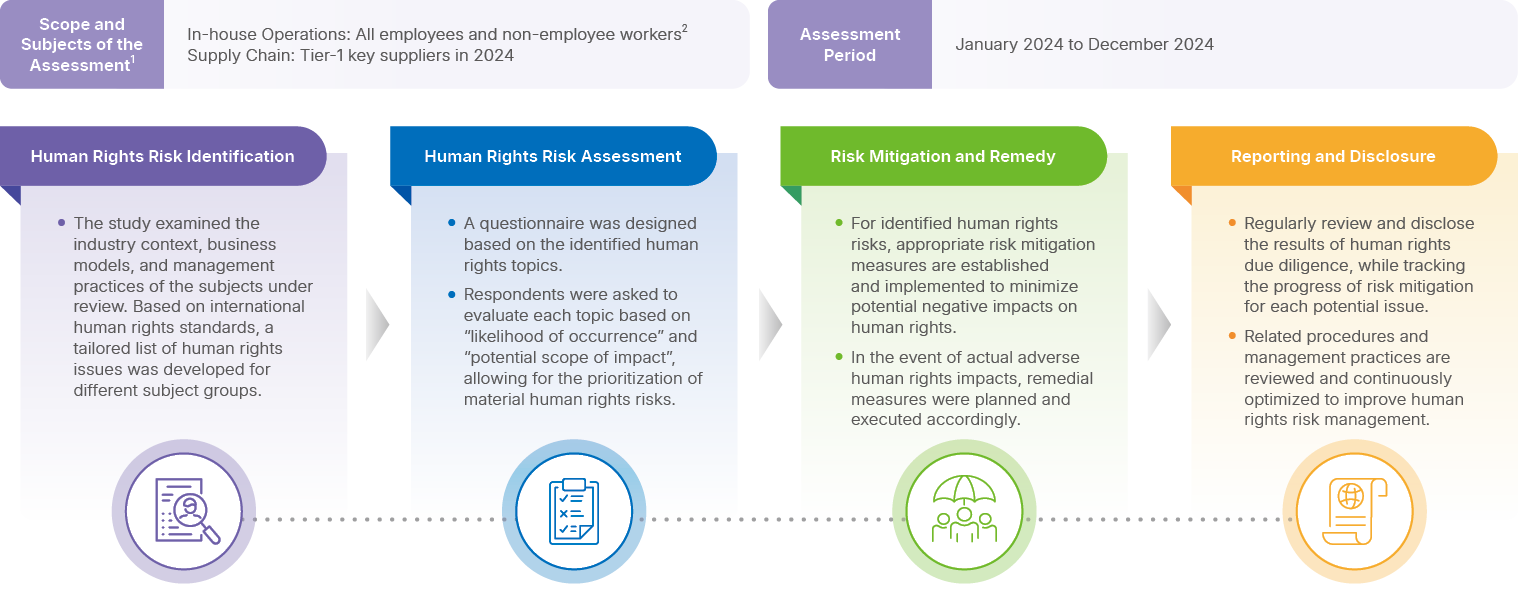
Note 1: The assessment coverage rate reached 98% for in-house operations and 100% for Tier-1 key suppliers. No major human rights risks were identified within the assessed scope.
Note 2: Non-employee workers include: cleaning staff, property management personnel, security guards, dispatched workers, on-site vendor representatives, and individual consultants.
Note 2: Non-employee workers include: cleaning staff, property management personnel, security guards, dispatched workers, on-site vendor representatives, and individual consultants.
Human Rights Risk Assessment Result
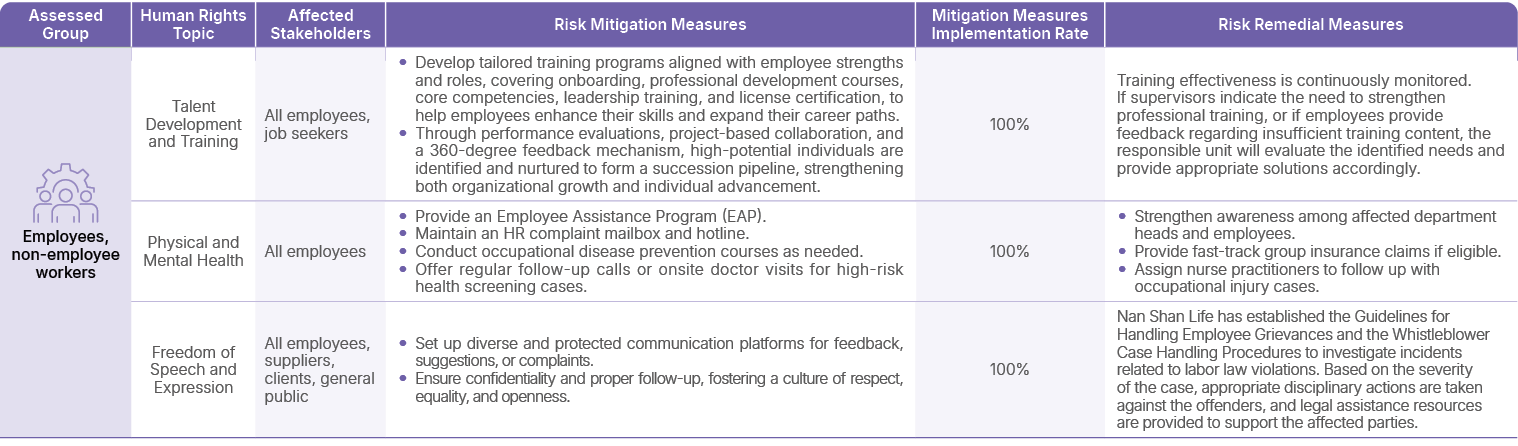
The human rights risk identification process recognized 22 potential adverse human rights issues, including diversity and inclusion, protection of persons with disabilities, maternal protection, freedom of speech and expression, equal pay, employment discrimination, freedom of association, bullying and harassment, physical and mental health, occupational safety, pollution and emissions, forced labor, talent development, wages and benefits, working hours, child labor and protection of minors, whistleblower protection, personal data privacy and information security, human trafficking, collective bargaining, financial inclusion, and ethical business conduct. Assessment questionnaires were designed based on relevant topics and tailored to different stakeholder groups. Stakeholders covered in this assessment include: employees, female employees, children and minors, non-employee workers, clients, suppliers, and the general public.
Own Operations
Supply Chain

