In today's rapidly evolving digital landscape, the financial industry is facing unprecedented transformation and challenges. In 2023, Nan Shan Life further advanced its “Digital Empowerment” strategy, accelerating its comprehensive digital transformation efforts to enhance service efficiency and client experience. Nan Shan Life actively adopted the international framework standard TOGAF® (The Open Group Architecture Framework) to establish a robust digital architecture across strategic, business, application, data, technology, and information security domains.
Digital Governance
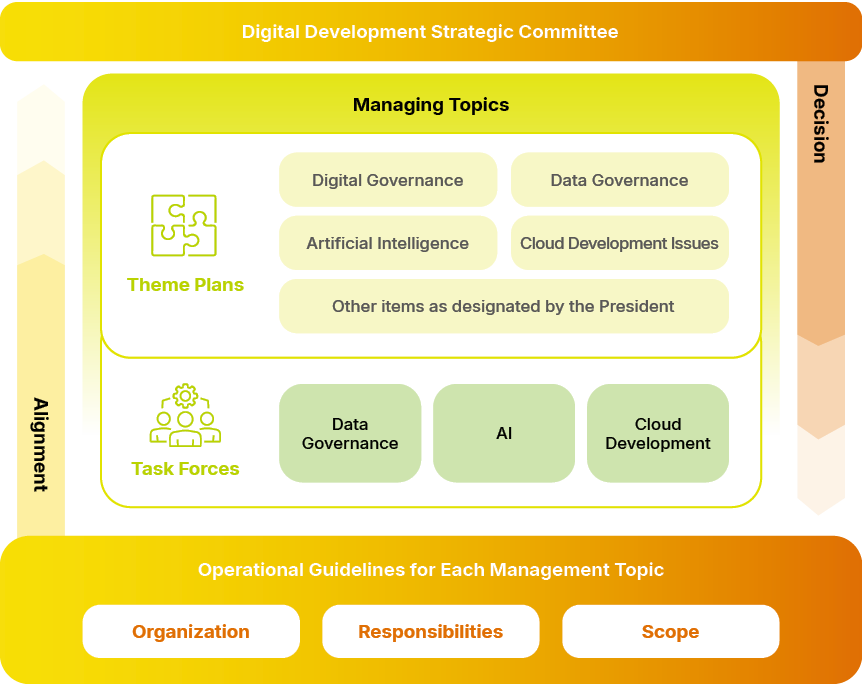
To strengthen leadership and decision-making in digital development, Nan Shan Life established the Digital Development Strategy Committee (DDSC), chaired by the President and including the Chief Strategy Officer, Chief Digital Officer, Chief Information Officer, Chief Information Security Officer, the Head of the Experience Governance and Design Center, and other department heads. Quarterly meetings are held to align on digital vision and major strategies, coordinate cross-departmental resources, and ensure effective implementation and progress of digital initiatives.
Digital Development Strategy
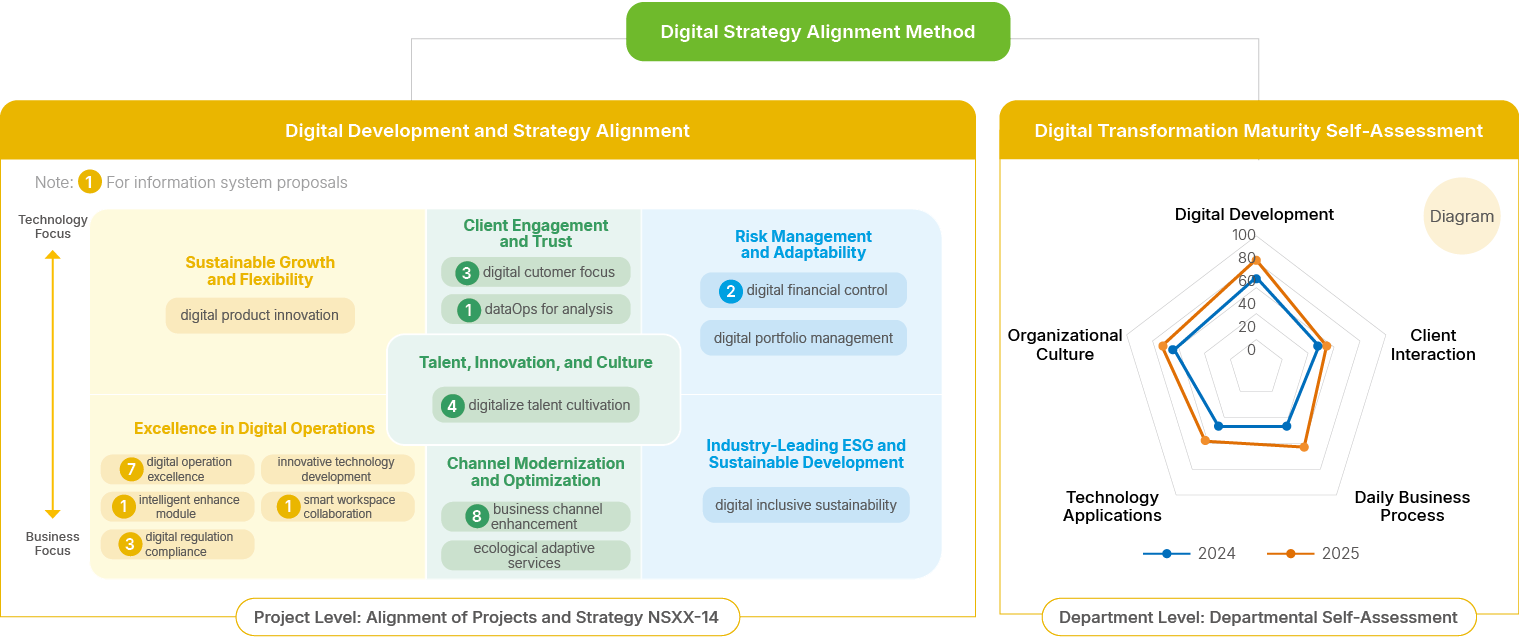
Nan Shan Life established a Digital Maturity Assessment Mechanism, conducting annual self-assessments across departments to evaluate the status and needs in areas such as digital development, business processes, and technology application. A Digital Governance Dashboard is generated based directly on the assessment results to support visualized project management, enabling comprehensive performance tracking and ensuring rational allocation of resources. Through this mechanism, Nan Shan Life effectively monitors the Company’s overall digitalization progress and enhances the outcomes of digital transformation. It serves as a guiding reference for refining future strategies and adjusting development directions to support the advancement of the Company’s digital blueprint.
Digital Empowerment and Mobile Sales Support
In recent years, Nan Shan Life has actively driven innovation through the adoption of new technologies and big data across insurance products, services, and operational processes. The Company pioneered industry-first services such as QR code audio file access and Braille policy documents, enabling persons with disabilities to obtain insurance protection in a more convenient and accessible manner. By leveraging AI-powered Optical Character Recognition (OCR) and Natural Language Processing (NLP) to replace manual decision-making processes, and integrating external resources, Nan Shan Life has applied blockchain technology in areas such as e-policies, blockchain consortiums for policy service and claims, the Medical e-Service Claim System, and a direct claims deduction service for medical expenses.
AI Innovation Application and Governance
Dandelion Project – Deepening Digital Transformation
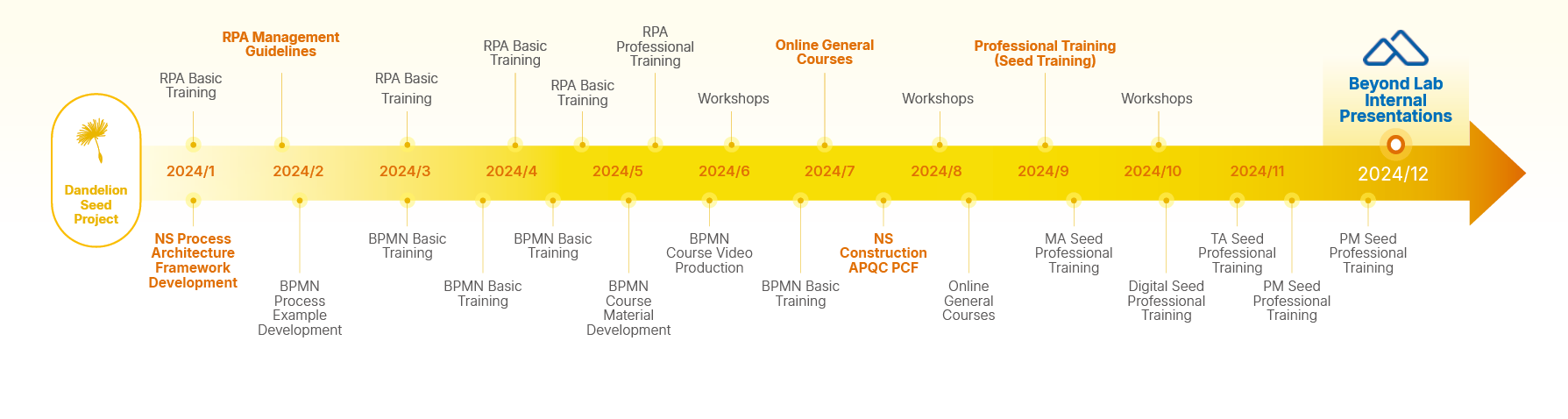
To spearhead digital transformation and process optimization, Nan Shan Life established Beyond Lab as its core driver. The Lab promotes digitalization by adopting BPMN for business process modeling and implementing AI and RPA (Robotic Process Automation) technologies to significantly boost operational efficiency and intelligent automation levels. Beyond Lab operates through in-house development and cross-department collaboration, creating exemplary applications while offering consulting support and professional training. It assists departments in reviewing core business processes, identifying opportunities for optimization, and implementing AI and RPA-based automation.
GenAI-Enabled Sanctions Investigation System
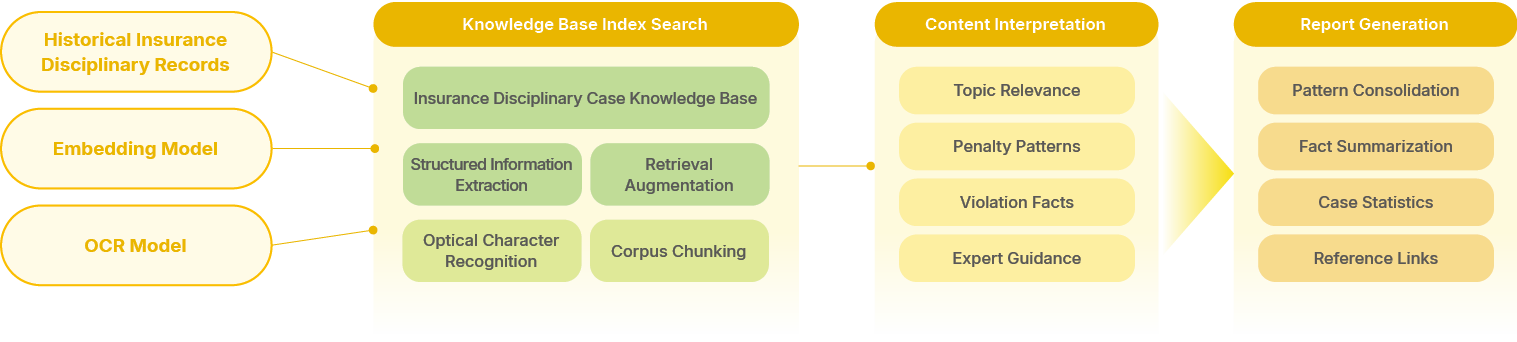
In the increasingly complex landscape of regulatory compliance in the insurance industry, retrieving sanction cases has traditionally required significant manual effort — which is both time-consuming and prone to error. To improve search efficiency and accuracy, Nan Shan Life leveraged generative AI technology to develop the GenAI-enabled Sanctions Investigation System, an innovative system that effectively addresses many of the challenges associated with manual case retrieval.